Oct 27, 2026Skincare & Personal Care
Lotion Pump Bottles 101: Pump Types, Neck Finishes and Compatibility
How lotion pump bottles work — pump types, neck finish sizes (18/410 to 28/410), viscosity matching and compatibility testing before you order wholesale.
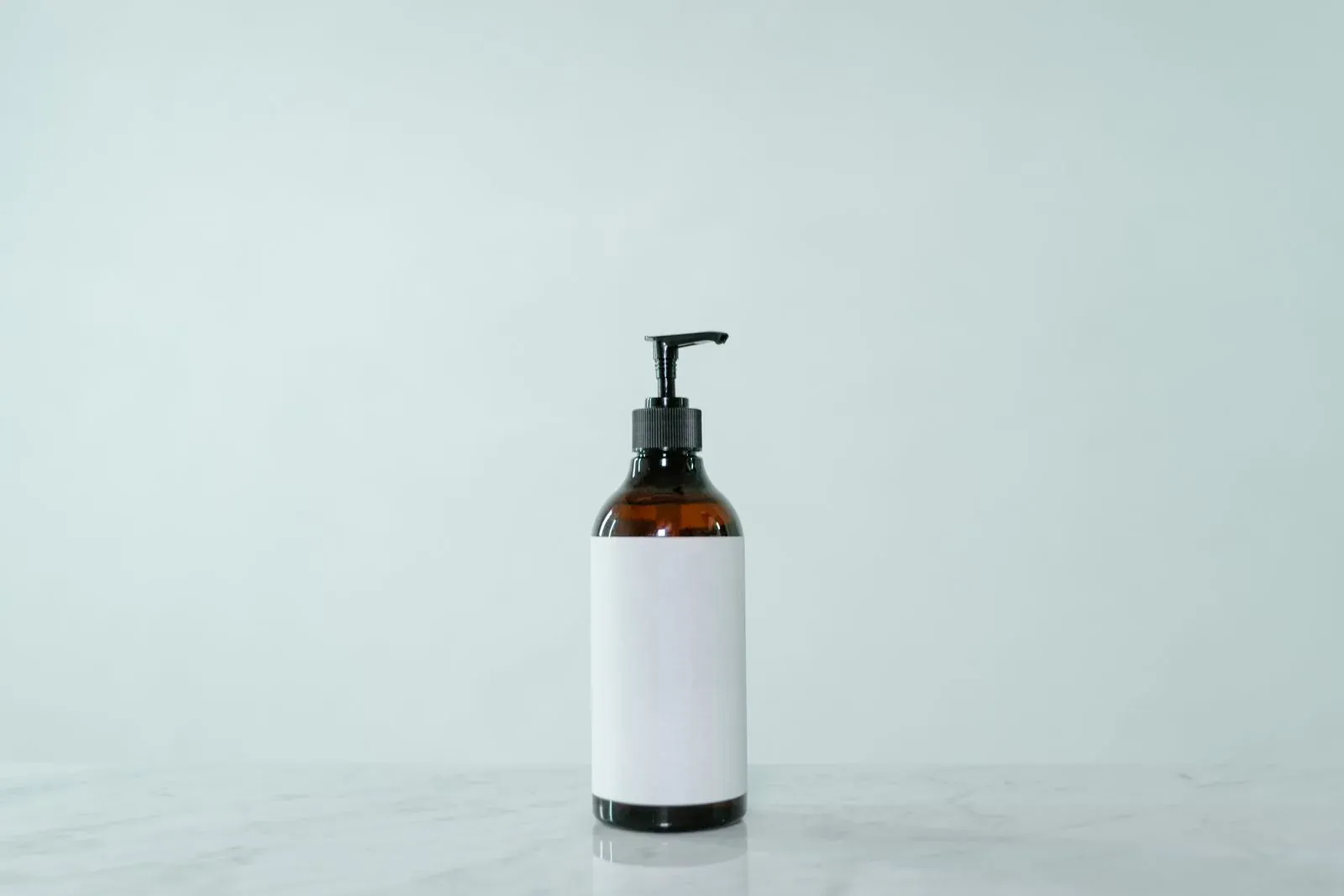
Droppers dose in drops; pumps dose in presses. That one sentence is why the lotion pump bottle is the default format for lotions, liquid soaps, hair products and anything a customer uses daily with one hand. But "pump bottle" hides a surprising amount of engineering: pump types, neck finishes, dip tube lengths and viscosity matching. Get any one of them wrong and the bottle either doesn't prime or delivers a blob.
This is the orientation we give buyers specifying their first pump bottle program.
The anatomy of a pump bottle
[IMAGE PLACEHOLDER 1: Exploded view of a lotion pump: actuator, pump mechanism, dip tube, glass bottle, arranged left to right. To be replaced with a real photo before publishing.]
Four parts matter:
1. The bottle — glass or PET, defined by its capacity and neck finish.
2. The pump actuator — the head you press; it defines output volume and the lock mechanism.
3. The neck finish — the threaded standard that joins pump to bottle (more below).
4. The dip tube — the straw inside the bottle that draws product up. Length and cut angle decide how much product you can actually get out.
When you buy a complete pump bottle (/products/glass-lotion-bottles-wholesale), these arrive matched. When you buy bottles and pumps separately, matching them is your job — which is why we publish our closures and dispensers range (/packaging-components) alongside the bottles.
Neck finishes: the 410 standard and what the numbers mean
[IMAGE PLACEHOLDER 2: Macro shot of 24/410 pump threads engaging a matching glass bottle neck. To be replaced with a real photo before publishing.]
Neck finishes follow the GPI (Glass Packaging Institute) naming convention: diameter/thread style. The numbers you will meet on pump bottles:
– 18/410, 20/410 — slim bottles: serums, eye makeup removers, small lotion formats.
– 24/410 — the most common mid-size lotion bottle finish.
– 28/410 — larger body lotions, shampoos, and wide-output pumps.
The "410" is the thread style for pumps and closures; "400" is a shallower thread used mostly for screw caps. The numbers must match exactly — a 24/410 pump does not seal properly on a 24/400 neck. If neck naming makes your eyes glaze, our neck finish guide (/closure-guide) walks the measuring method step by step: measure the outer diameter of the thread in millimeters, count the thread starts, and match the finish name.
Pump types and what they're for
– Standard lotion pump — the everyday workhorse; output typically 1–2 ml per press on common actuators, with locking heads (press-down-and-turn or clip) for shipping safety.
– Treatment pump / serum pump — lower output, smaller apertures, for lightweight formulas and premium dosing.
– Locking vs. non-locking: for any bottle that ships, insist on a lock mechanism. Pumps that rattle loose in transit leak, and the leak is your brand's problem, not the carrier's.
Viscosity matching: the spec everyone skips
Pumps move product by positive displacement, and they are tuned to a viscosity band:
– Thin liquids (toners, some facial oils): a standard pump may sputter or drip; treatment pumps or droppers like our dropper range (/dropper-bottles) dose more cleanly.
– Medium lotions (body lotion, hand cream, liquid soap): the standard 24/410 or 28/410 pump's home turf.
– Thick creams and gels: need larger apertures, shorter dip tubes and stronger spring return — or a jar with a spatula instead of a pump at all.
The practical rule: test the pump with your actual formula at working temperature. A pump that performs with water will not necessarily perform with your shea-butter body lotion, and the difference shows up in customer reviews, not in the specification sheet.
Compatibility checks before you order wholesale
Run this list on samples before committing to quantity:
1. Priming: how many presses to first product? (1–3 presses is normal; more than 5 annoys customers)
2. Output consistency across 20 presses (weigh the output — variance shows up in dosing)
3. Leak test: lock the pump, lay the filled bottle on its side for 48 hours
4. Dip tube length: reaches the bottom corner without kinking against the base
5. Actuator and collar finish match the bottle's aesthetic (collar sits flush, no gap)
6. Formula compatibility: seals and tube materials against your product at 7 days
Our 200 ml slant-shoulder lotion bottle (/products/200ml-slant-shoulder-lotion-bottle) with matching pumps is a typical starting point for buyers testing this category, and pump components and cap options (/products/28mm-bamboo-lotion-pump-cap) are stocked separately for brands assembling their own programs.
Glass pump bottles: what changes vs plastic
Glass adds weight, chemical inertness and shelf presence — and one engineering constraint: pump length must match the bottle's internal geometry, because glass necks and base shapes are less forgiving of an off-spec dip tube than soft plastic. Buying bottle and pump from the same supplier removes that risk. Our bottle range covers 5–750 ml formats, with pumps and closures matched per SKU.
FAQ
What size pump fits my bottle?
Match the neck finish exactly (e.g., 24/410 pump on 24/410 bottle). Measure outer thread diameter and thread style, or ask us — send the bottle name and we will confirm the matching pump finish.
Why does my pump dispense product but then drip?
Usually a viscosity mismatch (formula too thin for the pump's aperture) or a worn/dirty check valve. Test with your actual formula; if drip persists, move to a treatment pump or a smaller output actuator.
How much does a pump dispense per press?
Common actuators deliver roughly 1–2 ml per press, but output varies by actuator design and formula viscosity — weigh 10 presses on your formula for a real number.
Do you supply pumps and bottles together?
Yes — complete matched pump bottle programs, or components separately if you assemble your own. See the components range (/packaging-components), and send us your viscosity and dose requirements — we reply within one working day.
About SEALAND Packaging: Xuzhou SEALAND is a factory-and-trading combine supplying glass bottles, jars, pumps and closures wholesale, with in-house OEM/ODM development and QC, stocking programs and 7–15 day lead times on standard orders.