Oct 27, 2026Skincare & Personal Care
Glass Cosmetic Jar Buying Guide: Sizes, Lids and Decoration for Skincare Brands
How to choose glass cosmetic jars wholesale — size by product type, lid and liner options, decoration methods and MOQ baselines for skincare and cream brands.
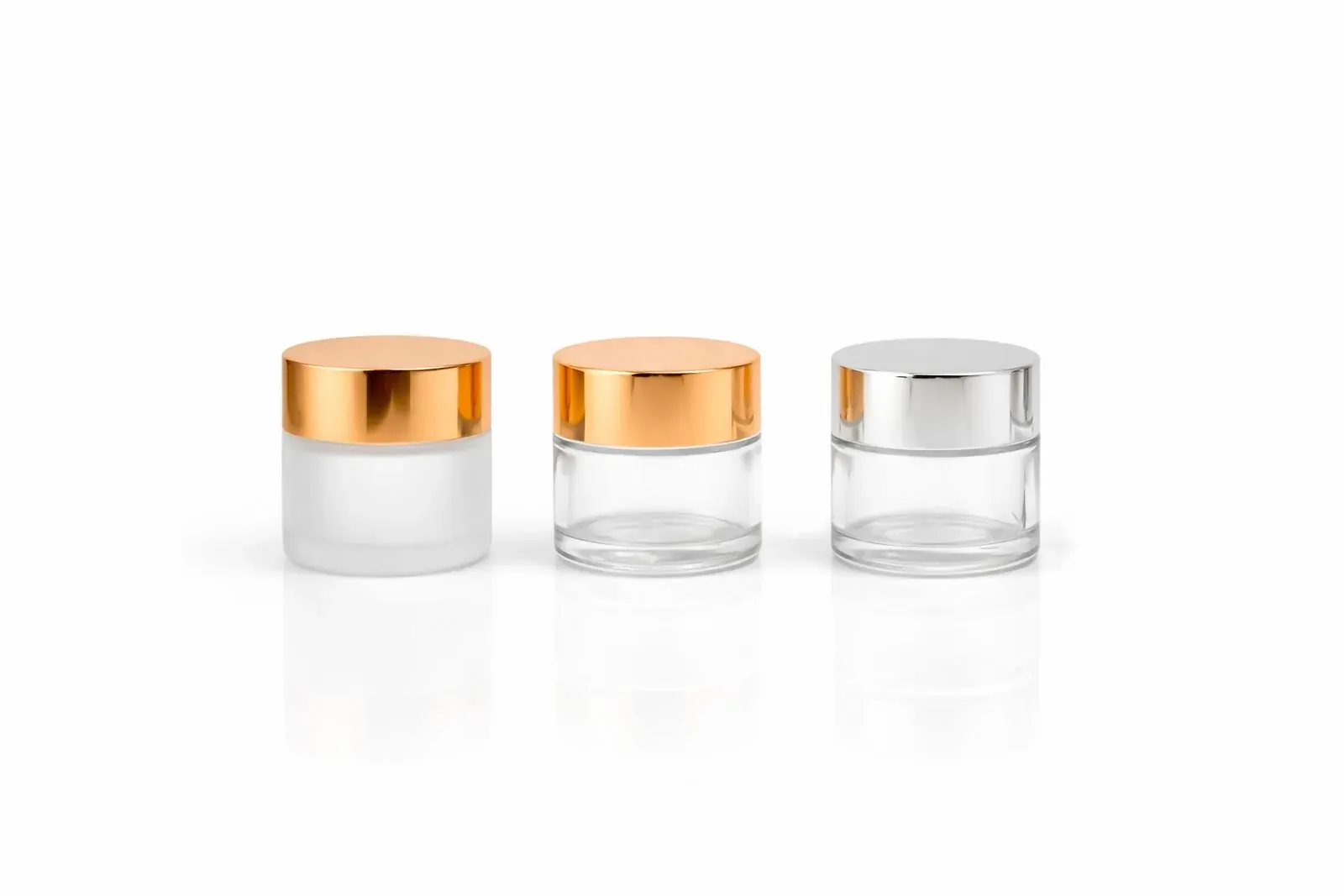
The cosmetic jar is the most forgiving format in beauty packaging — wide mouth, no mechanism, product visible or hidden as you please. It is also the format where brands most often order the wrong size, because "50 g jar" means different fills depending on the formula's density and the brand's positioning.
This guide covers the three decisions that define a jar program: size, lid system and decoration — with the MOQ baselines to expect at wholesale.
Step 1: Size the jar to the product, not the shelf
[IMAGE PLACEHOLDER 1: Size-comparison row of glass cosmetic jars from small 15 g to wide 300 g mouth jar. To be replaced with a real photo before publishing.]
Glass cosmetic jars run from tiny sample formats to wide-mouth treatment jars. Our range covers 5–300 g across cosmetic and wellness jars (storage formats run larger). The common mapping:
Lip balm, solid perfume, eye treatment — Typical jar size: 5–15 g; Why: Tiny fills; weight reads premium.
Eye cream, night balm — Typical jar size: 15–30 g; Why: 1–2 month daily-use supply.
Face cream, moisturizer — Typical jar size: 30–50 g; Why: The industry's default hero size — see our cream jar range (/products/glass-cream-jars-wholesale).
Masks, balms, body butter — Typical jar size: 100–300 g; Why: Wide mouth for fingers or spatula — e.g., our mask jar line (/products/glass-face-mask-jars-wholesale).
Two sizing rules that save reorders:
1. Convert grams to milliliters for your formula. A "50 g jar" is sized by glass capacity in grams of water; a dense balm and an airy cream fill very differently. Ask us for the jar's ml capacity and test-fill with your product.
2. Positioning beats parsimony. A 30 g jar at a premium price and a 50 g jar at the same price say different things about your brand. Size is a marketing decision as much as a filling one.
Step 2: Choose the lid system — this is where brands differentiate
[IMAGE PLACEHOLDER 2: Lid options lineup: matte black screw lid, gold lid, bamboo lid, inner lid shown separately. To be replaced with a real photo before publishing.]
The jar is glass; the lid is the signature. The main systems:
– Screw lids (aluminum, ABS, PP) — the workhorse: reliable seal, full decoration surface, broad color range including matte black, gold and white.
– Bamboo lids — the natural-skincare signal; paired with clear or amber glass, they photograph beautifully. See our bamboo-lid jar line (/products/glass-cosmetic-jars-bamboo-lid).
– Inner lids/liners — the invisible quality feature: a fitted inner lid (/products/cosmetic-jar-inner-lid) stops leaks in transit and slows evaporation for balmy formulas. For any jar shipping e-commerce, budget for it.
Seal check before bulk: fill with your formula, close, invert for 48 hours, and check for migration around the thread. Oils and balms creep — the liner choice matters more than the outer lid's color.
Step 3: Decoration — what works on jars
Jars decorate differently from bottles because the canvas is wide and short:
– Silk screen on the lid or the jar face — logos and short text.
– Hot stamping on lids — foil logos read strongly on matte black caps.
– Frosted glass jars for a soft-touch, semi-transparent look that flatters cream tones.
– Frosted vs. clear tradeoff: clear shows the product color (good for distinctive formulas), frosted hides separation and fingerprinting (good for natural formulas that vary batch to batch).
Our custom packaging program (/custom-packaging) runs silk screen, hot stamping and frosting in-house with the OEM/ODM team.
MOQ baselines for jar programs
– Blank stock jars: from 500 pcs on many SKUs.
– Decorated jars (print/frost/foil): typically 2,000–5,000 pcs, confirmed per SKU and process.
– Custom jar shapes: from 100,000 pcs (mold economics).
– Custom boxes: from 5,000 pcs.
Lead times: stock orders 7–15 days; decorated orders 7–15 working days after artwork approval. Samples are US$39 including shipping, refundable against the bulk order — see the sample guide (/samples) for the six checks to run before scaling.
Quality checkpoints specific to jars
– Weight and stability: a 300 g mask jar tips over easily if the base is narrow — check the fill-state center of gravity.
– Thread quality: lids should engage smoothly over 10 open/close cycles without cross-threading or wobble.
– Glass color consistency across the batch — especially for amber and violet tones where drift is visible when jars sit side by side on a shelf.
FAQ
What size cosmetic jar should I start my cream line with?
30–50 g is the category default for face creams; 15–30 g for eye products; 100–300 g for masks and body products. Test-fill your formula in a sample — density, not the label claim, decides the right jar.
Do glass cosmetic jars need an inner lid?
For anything that ships or holds oils/balms: yes. The inner lid prevents in-transit leakage and reduces evaporation; it is the cheapest quality upgrade in the jar program.
Can I mix jar sizes in one order?
Yes — orders can mix sizes and colors; MOQ applies per SKU, so a 500/500 split across two SKUs works for blank stock. Send the basket and we will quote the mix.
Are bamboo lids moisture-safe for bathrooms?
Sealed and finished bamboo lids handle normal bathroom humidity; for high-moisture environments we recommend paired inner lids and testing with your formula — samples make this a 10-minute check.
About SEALAND Packaging: Xuzhou SEALAND is a factory-and-trading combine producing glass cosmetic jars, bottles and closures wholesale — thousands of ready-goods series (company-stated), in-house OEM/ODM decoration and QC, and samples refundable against bulk orders. Browse the cosmetic jars collection (/cosmetic-jars) or send your specification — we reply within one working day.